Salicin 98%
- Assay
- ≥98% Salicin
- Method
- HPLC
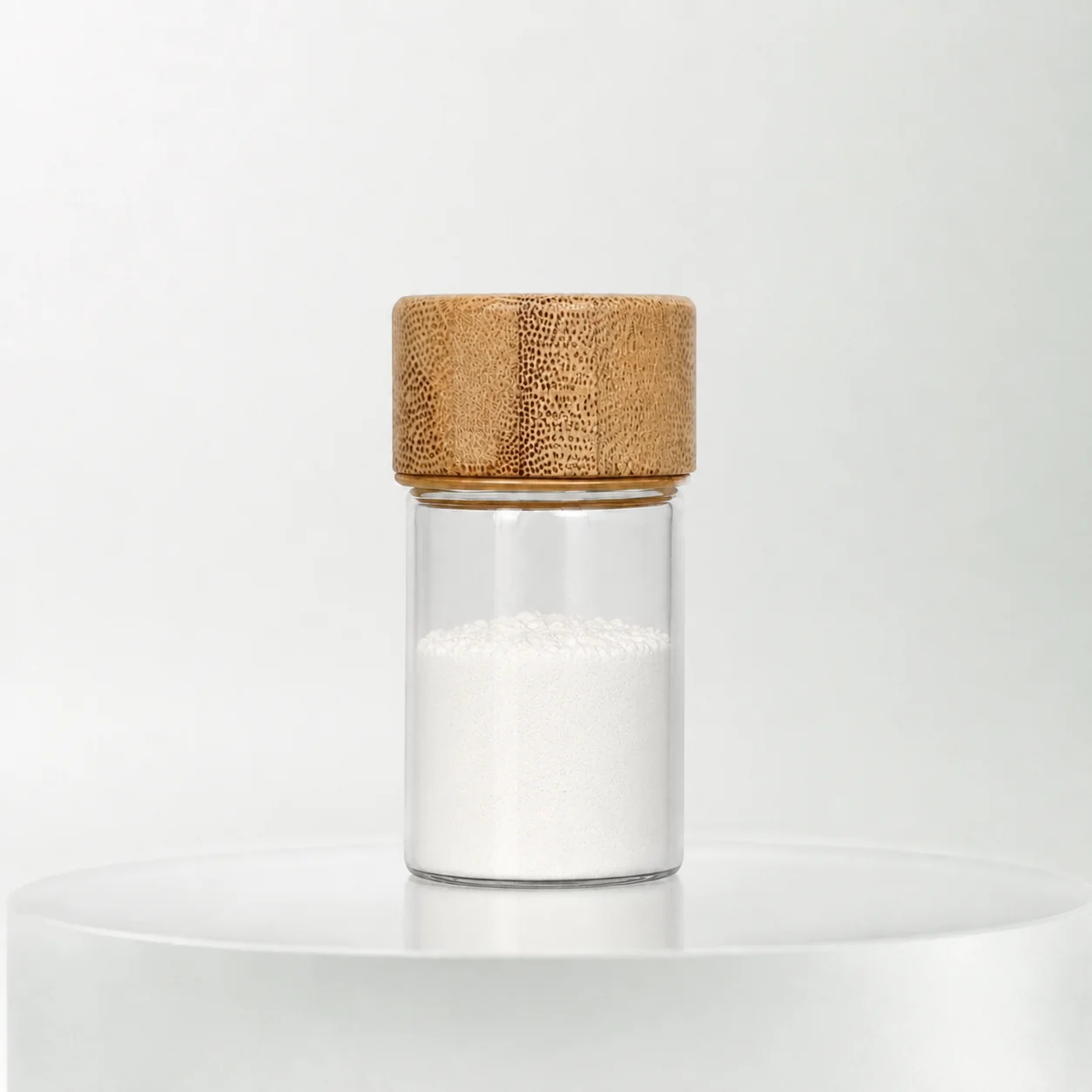
A white powder with defined active identity and HPLC-controlled assay for cosmetic formulation development.
Request Salicin 98% sample →PH-NP 011 · PRODUCT DATA
High-Purity Salicin for Oil-Control & Exfoliation Formulations
Willow bark-derived active ingredient
PINHONBIO® manufactures and supplies PH-NP 011 Salicin 98% (CAS 138-52-3), a high-purity willow bark-derived cosmetic ingredient tested by HPLC. It is designed for formulation development where formulators require a defined Salicin active rather than a general willow bark extract. COA, HPLC data, TDS and SDS are available for sample and commercial evaluation.
Technical documents, batch quality data and samples are available for ingredient evaluation.
QUICK ANSWER
Salicin 98% is a high-purity, willow bark-derived ingredient with a defined chemical identity: Salicin, CAS 138-52-3. Its ≥98% HPLC assay gives procurement and formulation teams a clear specification for cosmetic ingredient selection.
IDENTITY & PROPERTIES
PH-NP 011 is a white powder with a ≥98% Salicin assay controlled by HPLC. Its willow bark origin describes the source relationship; Salicin is the identity of the supplied active.
SPECIFICATIONS & SUPPLY
A defined active and a clear assay make specification comparison and batch-to-batch quality evaluation more straightforward for projects that require Salicin rather than a broad botanical extract.
A white powder with defined active identity and HPLC-controlled assay for cosmetic formulation development.
Request Salicin 98% sample →| Parameter | Specification | Method / basis |
|---|---|---|
| Salicin assay | ≥98% | HPLC |
| Appearance | White powder | Visual inspection |
| Active identity | Salicin / CAS 138-52-3 | Specification and SDS |
| Batch quality data | Results against product specifications | Corresponding batch COA |
98% describes raw-material assay, not a finished-formula use level or a claim of stronger efficacy.
SOURCING & QUALITY
PINHONBIO® supports Salicin 98% sourcing with a defined product specification, analytical documentation and practical formulation support, from sample evaluation to commercial supply.
PH-NP 011 combines Salicin identity, a ≥98% assay and white-powder appearance in a clear purchasing specification.
The specification and corresponding batch COA provide acceptance criteria and batch-specific results for quality evaluation and final quality release decisions.
Request the TDS, SDS and analytical documentation to support handling, ingredient selection and cosmetic prototype development.
Request a Salicin 98% sample for formulation evaluation or a quotation for commercial supply. Share the quantity, destination and document requirements for a focused response.
Additional test reports and market-specific statements depend on the available product file and destination requirements.
Explore PINHONBIO® analytical capabilities and quality support →
DOCUMENTATION
Request the Salicin 98% TDS, specification, SDS and corresponding batch COA. Supporting analytical reports are provided according to the available product documentation.
Request Salicin 98% Documents →PACKAGING
1 kg per bag or 25 kg per drum. Final pack and label details follow the confirmed order.
STORAGE
Store sealed in a cool, dry place and protect from light. Shelf life and conditions follow the current label, TDS and SDS.
BEFORE ORDERING
Tell us your required quantity, destination, cosmetic format and documents. Request pricing, lead time and supply terms for PH-NP 011 Salicin 98%.
INGREDIENT SELECTION
General willow bark extract is a multi-component botanical material. Salicin is a defined glycoside compound with CAS 138-52-3. They offer different ingredient profiles for formulation projects.
Contains multiple botanical constituents. Its composition and Salicin concentration depend on the extract specification. This broader profile may suit projects seeking a multi-component botanical ingredient.
Provides a defined Salicin identity and ≥98% HPLC assay. This supports clearer specification comparison and more straightforward batch-to-batch quality evaluation.
Willow Bark Extract ≠ Salicin. Choose the ingredient profile that fits the formulation brief; the two materials should not be treated as the same ingredient.
CHEMICAL IDENTITY
Salicin and Salicylic Acid are different chemical entities. Their formulation behavior and regulatory considerations must be assessed separately.
A glycoside compound with a willow-derived source relationship. PH-NP 011 is supplied as a ≥98% Salicin grade for cosmetic formulation development.
A chemically distinct ingredient with its own formulation behavior and regulatory restrictions. Its use conditions and limits cannot be transferred to Salicin.
Salicin is not “natural Salicylic Acid.” Direct conversion into Salicylic Acid in a cosmetic formula is not established for this product; equivalent use levels or effects should not be assumed.
INGREDIENT FAQ
Practical answers for ingredient selection, technical documents and purchasing.
Salicin is a defined glycoside compound. PH-NP 011 is a willow bark-derived Salicin 98% ingredient for cosmetic formulation development.
The CAS number of Salicin is 138-52-3.
No. General willow bark extract is a multi-component botanical material; Salicin is a defined compound. A 98% Salicin specification identifies a high-purity active rather than a general extract.
PINHONBIO® supplies Salicin 98%, with a ≥98% Salicin assay and white-powder appearance, under product code PH-NP 011.
Salicin assay is controlled by HPLC. The product specification states the acceptance criteria, and the corresponding batch COA records batch-specific quality results.
Salicin (CAS 138-52-3) is a glycoside; Salicylic Acid (CAS 69-72-7) is a different chemical entity. They have distinct formulation behavior and regulatory considerations, and equivalent use levels or effects should not be assumed.
Request the specification, TDS, SDS and corresponding batch COA for PH-NP 011. Supporting analytical documentation is provided according to the available product file.
Yes. PINHONBIO® is a Salicin Manufacturer & Supplier, offering the 98% HPLC-controlled grade, technical documentation, sample evaluation and commercial supply support.
COSMETIC APPLICATIONS
Oil-control and exfoliation concepts are the principal formulation-development directions for Salicin 98%. Performance and skin comfort are evaluated in the complete cosmetic formula. These development directions do not establish salicylic-acid-equivalent exfoliation or measured sebum reduction for PH-NP 011.
Explore Salicin 98% in cosmetic concepts for oily-skin routines. A defined active specification provides a consistent starting point for prototypes and evaluation of oil-related endpoints.
Develop cosmetic prototypes focused on exfoliation and skin-surface texture. Assess the intended endpoints and skin comfort in the finished formulation; the ingredient specification alone does not establish finished-product performance.
FORMULATION DEVELOPMENT
Start with a Salicin 98% sample and the intended cosmetic format. Request technical guidance for dissolution, processing and prototype development; establish use levels through formulation testing.
Salicin is a defined glycoside. Its molecular formula and molecular weight are reference identity data, not batch-assay results. The cosmetic ingredient name SALICIN appears separately from SALICYLIC ACID in the European Commission ingredient glossary.
A published topical serum study investigated visible skin-aging endpoints. It does not establish BHA-equivalent exfoliation or sebum reduction for this grade. Evaluate dissolution, physical stability, the intended cosmetic endpoint and skin comfort in the complete formula.
PubChem compound identity · European Commission ingredient glossary · Topical study abstract
PH-NP 012
PH-NP 013
PH-NP 014
PH-NP 015
PROJECT REQUEST
Request a quotation, sample or current technical documents. Include the destination market and formulation conditions when available.